
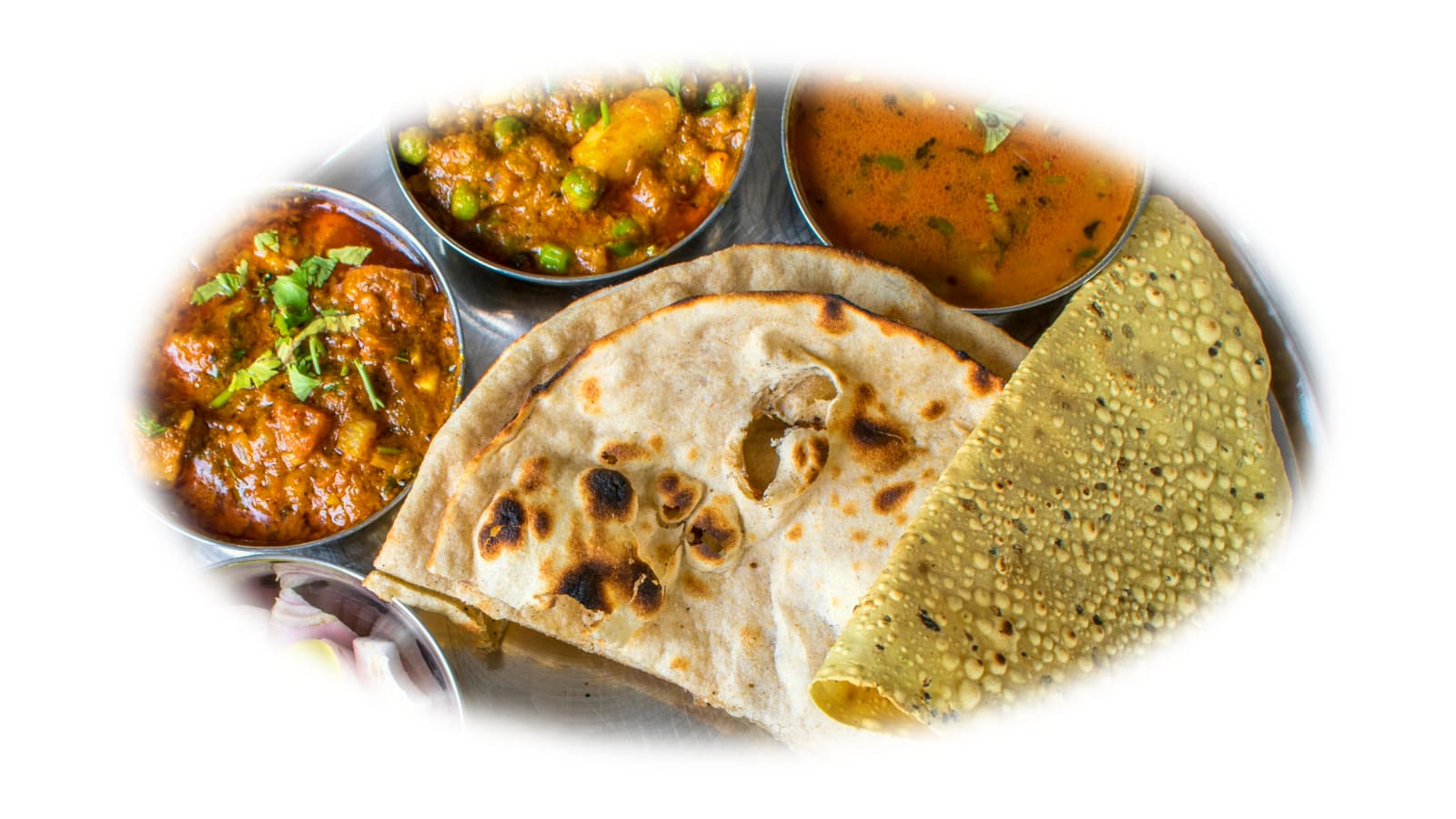
British Asian weddings have a catering reality that Western weddings simply don't: at one event, you might be feeding 200 vegetarians, 40 strict Jains, 80 halal-only Muslim guests, 60 mixed eaters, and a handful of Western guests who want to know what paneer is.
You cannot solve this with a single buffet. Or rather, you can, but the result is mediocre — meat that's been near vegetarian dishes, paneer that touched the same serving spoon as chicken, Jain elders who can't eat root vegetables and now have nothing.
The right approach is to brief the caterer properly, not to leave it as their problem. This guide is how to do it.
The dietary axes — understand them separately
There are five distinct axes most British Asian wedding caterers need to handle. They overlap, but they are not the same.
1. Vegetarian vs non-vegetarian
The basic split. Most Hindu, Sikh and Jain families are vegetarian, often strictly. Vegetarian in the South Asian sense usually includes dairy and eggs (ovo-lacto), but many strict Hindus exclude eggs. Some Jain families exclude dairy too.
2. Halal vs non-halal
If meat is being served, is it halal? For Muslim guests, this matters. The rule: meat slaughtered according to Islamic law, no pork, no alcohol in the cooking. Most British Asian wedding caterers are 100% halal by default, but if you're using a non-Muslim venue's in-house kitchen for, say, a fusion reception, ask explicitly.
3. Pure veg vs "vegetarian"
A "vegetarian dish" is one without meat. A "pure veg" kitchen is one where no meat has ever been cooked, no meat is being cooked simultaneously, no shared utensils, no shared oil. For strict Hindu, Brahmin and Jain elders, this is a hard requirement. The caterer needs a separately equipped vegetarian kitchen for this — not just "we're being careful".
4. Jain restrictions
Jain dietary law excludes:
